
A senior-friendly dining experience combines privacy, healthier meal options, and community engagement to create a nurturing atmosphere. By incorporating designated private areas and smaller dining groups, you can enhance comfort and encourage meaningful interactions. Prioritizing delicious, nutrient-rich meals helps combat malnutrition while offering flexibility in menu choices fosters a sense of independence. With a focus on innovation and elegance, lively dining spaces emerge as social hubs, making every meal an opportunity to connect. Discover more about creating the perfect atmosphere.
Key Takeaways
- Designated private dining areas with cozy nooks enhance comfort and dignity for seniors, promoting a relaxed atmosphere.
- Restaurant-style dining encourages exploration of new flavors, fostering social interactions and reducing feelings of loneliness among seniors.
- Nutritional education emphasizes the importance of omega-3 and fiber-rich foods, ensuring meals are both healthy and appealing.
- Smaller dining groups and themed nights create meaningful connections, making dining a vibrant and enjoyable social event for seniors.
- Flexibility in meal choices enhances seniors’ independence, allowing them to tailor their dining experiences according to personal preferences.
Importance of Privacy and Socialization in Dining
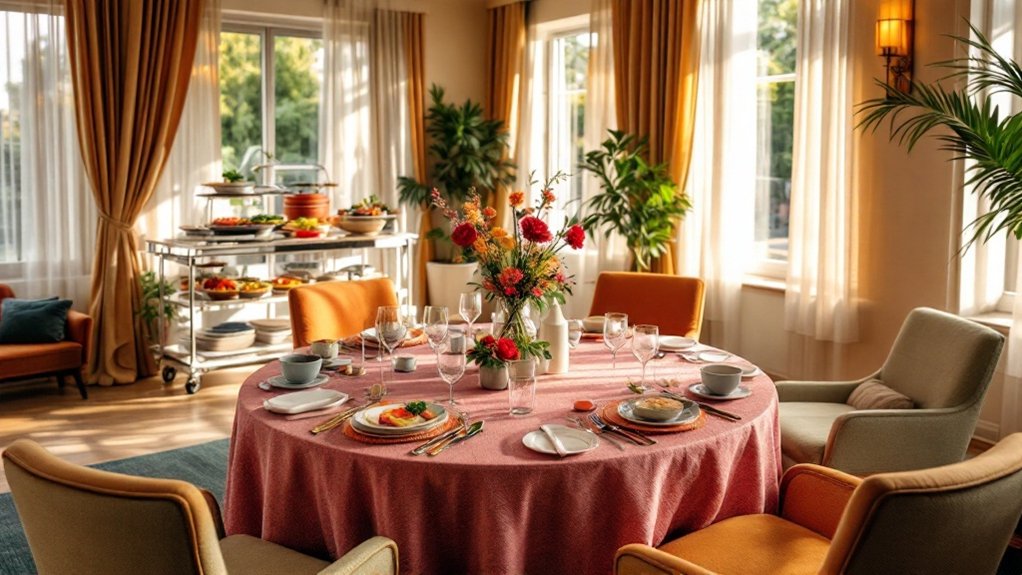
When you think about dining experiences for seniors, balancing privacy and socialization is key to enhancing their overall well-being.
Creating designated private dining areas gives seniors the choice to enjoy meals alone or with others, respecting their comfort and dignity. Consider using privacy screens or cozy nooks to foster an inviting atmosphere. Encouraging personalization of dining spaces with familiar items can further enhance their comfort. Additionally, respecting personal space allows seniors to feel more at ease during meals, promoting a relaxed dining environment. In facilities like Bonduel Assisted Living, the focus on advanced security systems ensures a safe and comfortable dining experience for residents with memory-related issues.
Meanwhile, promoting social engagement through themed nights or smaller dining groups allows for meaningful interactions without overwhelming them.
By integrating diverse seating arrangements, you facilitate both private dining and social connections, ensuring that every senior feels valued and connected within their community.
This balance truly enriches their dining experience.
Prioritizing Healthier Meal Options
To enhance the dining experience for seniors, prioritizing healthier meal options is essential for their overall well-being. By focusing on nutritional education, you can introduce omega-3 rich foods like citrus salmon and fiber-rich options such as oatmeal and leafy greens. This is especially important as Malnutrition in the elderly affects a significant percentage of seniors, making it imperative to offer nutrient-dense meals that cater to their dietary needs.
These choices not only support hydration but also provide crucial vitamins and minerals. Ensuring meal accessibility is key; utilize pantry staples for quick and easy preparation, and consider pre-prepared ingredients to save time. Incorporating whole grains and diverse protein sources adds variety and energy to meals. By planning structured meal options, you help seniors maintain consistency in their diets, promoting better health and enhancing their dining experience in your community. Additionally, fostering a community atmosphere during mealtimes can encourage social interaction and improve residents’ overall quality of life.
Enhancing Community Through Restaurant-Style Dining
How can restaurant-style dining transform the community experience for seniors?
It can create a vibrant atmosphere where menu innovation allows for a diverse range of culinary experiences. By offering various meal options, you encourage residents to explore new flavors and cuisines, making dining an adventure instead of a routine.
Communal dining fosters social interactions, breaking down feelings of loneliness and promoting connections among residents. With the flexibility to choose when and what to eat, seniors gain a sense of independence, enhancing their dignity. This focus on balanced meals further supports their overall well-being.
Special events and themed meals turn dining spaces into central social hubs, encouraging friendships and celebration.
Ultimately, restaurant-style dining transforms meals into memorable experiences, enriching the community’s spirit and connection.
Expectations for Luxury Dining Experiences
Restaurant-style dining not only enriches the community experience for seniors but also sets the stage for luxury dining expectations.
You’ll find that luxury dining emphasizes sophistication and elegance, where every detail—from lighting to decor—is carefully considered. The atmosphere invites relaxation while maintaining a classy vibe, ensuring every meal becomes a memorable experience. Impeccable service is crucial, as it transforms a meal into an extraordinary occasion through personalized interactions. Furthermore, specialized care offered by facilities like Audubon Care Homes complements the dining experience, as it ensures that dietary needs and preferences are met.
High-quality, locally sourced ingredients are a hallmark, with chefs crafting innovative dishes that dazzle both the palate and the eye. Expect impeccable service, where staff tailor each interaction to meet individual preferences.
This attention to detail enhances the overall experience, leaving guests feeling valued and cherished. Ultimately, luxury dining isn’t just about food; it’s about creating unforgettable moments that resonate long after the meal ends.
Emphasizing Food Variety and Customization
While dining experiences should be enjoyable and fulfilling, they can also be tailored to meet diverse needs and preferences, especially for seniors. Emphasizing menu personalization allows you to cater to individual dietary requirements, like gluten-free or vegan options. By introducing diverse cuisines through themed dining events, you create opportunities for residents to explore flavors from around the world. Gathering community feedback guarantees that meals reflect the tastes and cultural considerations of those you serve. With digital menu systems and made-to-order options, residents can customize their meals easily, enhancing their dining satisfaction. This approach not only promotes nutritional balance but also fosters social engagement, making every meal a delightful experience that brings everyone together. Additionally, the Older Californians Nutrition Program ensures that seniors have access to nutritious meals through various services, further enhancing their dining options. Moreover, the emphasis on nutritious dining at Patient Pines highlights the commitment to providing balanced meals prepared by an experienced culinary team.
Overcoming Challenges in Senior Dining Implementation
As you endeavor to create a senior-friendly dining experience, overcoming the unique challenges in implementation is essential.
Start by addressing dietary compliance challenges, ensuring meals cater to chronic conditions like diabetes or heart disease. Use menu optimization strategies to balance nutrients while offering customized options, like gluten-free or low-sodium meals, that respect cultural preferences. Meeting nutritional needs is crucial for the overall health of residents.
Create a welcoming atmosphere with comfortable dining spaces and encourage social interaction through themed events. Focus on staff training to uphold food safety and hygiene standards.
Finally, manage operational challenges by balancing costs and quality, integrating technology for efficient ordering, and securing reliable suppliers for fresh ingredients.
Your commitment will foster a satisfying dining experience that truly serves the needs of seniors.
Frequently Asked Questions
What Types of Cuisines Are Most Popular Among Seniors?
You’ll find that Mediterranean flavors and classic comfort foods resonate deeply with seniors. These cuisines provide familiar tastes and nourishing qualities, making meals not just satisfying but also a comforting reminder of cherished memories and traditions.
How Are Dietary Restrictions Communicated to Kitchen Staff?
You guarantee allergen awareness by training staff to clearly communicate dietary restrictions. When customers share their needs, you facilitate meal adjustments through precise digital ticketing, enhancing safety and satisfaction in every dining experience.
Are There Cooking Classes Specifically for Seniors?
Yes, you’ll find cooking classes specifically for seniors, focusing on meal planning and essential cooking techniques. These classes promote healthy eating, foster connections, and empower you to create delicious, nutritious meals for yourself and others.
What Role Do Family Members Play in Dining Decisions?
Family members markedly shape dining decisions by sharing preferences and participating in meal planning. Their involvement guarantees meals reflect everyone’s tastes, leading to healthier choices and fostering connections that enhance the overall dining experience.
How Often Are Menu Options Updated in Senior Communities?
Menu options in senior communities are updated regularly, often weekly, to incorporate seasonal ingredients and prevent monotony. This rotation keeps meals exciting and guarantees residents enjoy a varied, nutritious dining experience tailored to their preferences.
Conclusion
In creating a senior-friendly dining experience, you’re not just serving meals; you’re fostering connections and enhancing well-being. By prioritizing privacy, health, and variety, you can transform meals into opportunities for socialization and joy. Embracing restaurant-style dining elevates expectations, ensuring seniors enjoy both comfort and luxury. While challenges may arise, your commitment to customization and community can make dining a delightful and nourishing part of their lives. Together, you can create a vibrant and inclusive dining atmosphere.