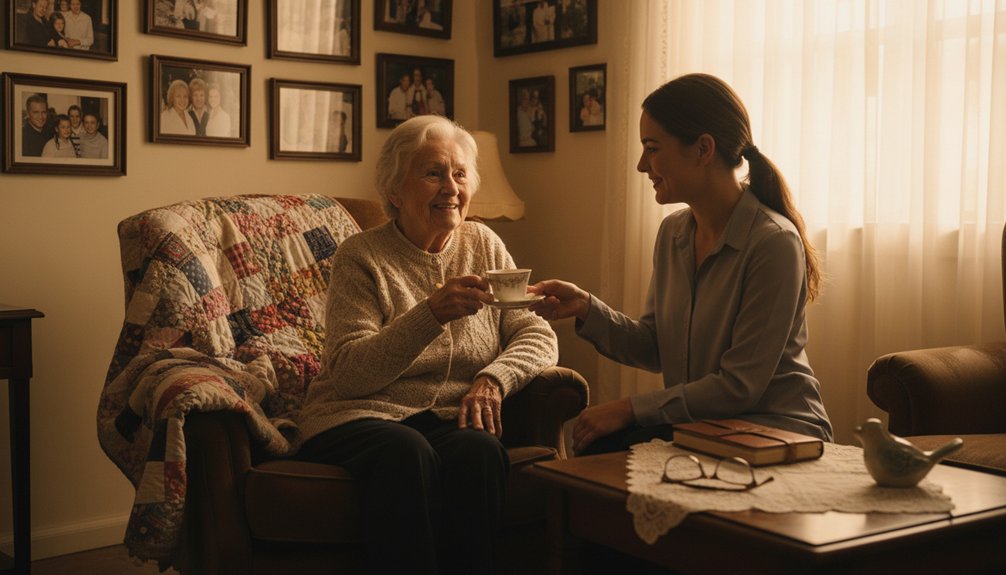
Consistency in routine is essential for your loved one with dementia. It provides stability, reduces anxiety, and fosters a comforting environment. Regular schedules create predictability, which helps ease confusion and enhances their sense of control. By incorporating familiar activities and structured interactions, you can strengthen connections and boost emotional well-being. Prioritizing routine not only supports their daily life but also improves quality of life overall. Discover ways to implement effective routines that truly make a difference.
Key Takeaways
- Consistent routines create familiarity, reducing anxiety and confusion for individuals with dementia.
- Predictable daily schedules foster a sense of control, enhancing emotional well-being and security.
- Caregiver consistency builds trust and strengthens connections, improving overall quality of life.
- Regular routines encourage independence by providing familiar tasks that boost confidence.
- Family involvement in structured activities promotes social engagement and shared experiences, reinforcing a sense of belonging.
Understanding Dementia and Its Challenges
When you explore understanding dementia, it becomes clear that this condition presents unique challenges for both individuals and their caregivers.
You’ll notice how memory loss can lead to confusion, making everyday tasks feel overwhelming. Individuals with dementia often struggle to communicate, which can lead to frustration for everyone involved.
As a caregiver, you may find yourself steering through unpredictable emotions and behaviors, requiring patience and empathy. It’s crucial to recognize these challenges to provide compassionate support.
Understanding dementia also means acknowledging that each person’s experience is different. Assisted living assessments can help identify specific needs and preferences, enabling caregivers to create a more supportive environment, enhancing the quality of life for those affected and easing the caregiving journey.
Your efforts can truly make a significant difference.
The Importance of Routine in Daily Life
Establishing a routine can markedly alleviate some of the challenges faced by individuals with dementia and their caregivers. By creating a structured daily schedule, you help foster a sense of stability and predictability. This can be especially beneficial in a world that may feel overwhelming.
Simple activities, like regular meal times and consistent wake-up hours, provide a comforting rhythm to the day. You’ll find that incorporating familiar tasks encourages independence and boosts confidence.
In addition, routines allow caregivers to plan their time effectively, reducing stress and enhancing the quality of care. When you prioritize routine, you not only support the well-being of those living with dementia but also create a nurturing environment that fosters connection and understanding. Engaging in structured routines can further enhance emotional well-being and provide comfort in daily life.
How Routine Reduces Anxiety and Confusion
Because routines create a familiar structure, they can considerably reduce anxiety and confusion for individuals with dementia.
When you establish a consistent daily routine, it gives them a sense of control and predictability, which can be incredibly comforting. Knowing what comes next helps ease their worries and minimizes disorientation.
Simple tasks, like a morning walk or a set meal time, can anchor their day and create touchpoints of familiarity. This predictability not only calms their minds but also fosters a sense of security. Implementing a routine can also assist in managing their financial planning strategies, ensuring that their resources are aligned with their care needs.
You’ll find that when they know what to expect, they’re less likely to feel overwhelmed. By prioritizing routine, you’re not just helping manage their condition; you’re enhancing their quality of life and promoting emotional well-being.
Creating a Personalized Care Plan
Creating a personalized care plan is essential for catering to the unique needs of someone with dementia. Start by evaluating their medical history, preferences, and daily routines.
Engage family members and caregivers to gather insights about what works best for them. This collaboration guarantees that the plan reflects their personality and promotes comfort.
Include specific goals, such as maintaining social connections, managing nutrition, or enhancing physical activity. Additionally, consider integrating in-home care services to provide tailored support in a familiar environment.
Be flexible; adapt the plan as their condition evolves. Regularly review the care plan to make necessary adjustments, ensuring it remains relevant and effective.
Incorporating Familiar Activities and Hobbies
Incorporating familiar activities and hobbies into daily routines can greatly enhance the quality of life for someone with dementia. Engaging in these beloved pastimes not only sparks joy but also offers a sense of stability and connection to their identity.
Think about the activities that your loved one enjoyed before their diagnosis—whether it’s gardening, painting, or playing music. You can create opportunities for them to participate in these activities, adapting them as needed to guarantee success.
Invite them to help with simple tasks, like sorting colors in laundry or watering plants. These small moments of engagement can foster meaningful interactions and provide comfort. Additionally, involving them in therapeutic gardening can offer a unique way to connect with nature while promoting emotional well-being.
The Role of Caregiver Consistency
While it might seem small, caregiver consistency plays an essential role in the well-being of someone with dementia. When you consistently provide care, you create a sense of security and trust. This familiarity helps reduce anxiety and confusion for the person you’re supporting. They can rely on your presence and your routines, which fosters a calming environment.
Being a consistent caregiver means showing up physically and emotionally, ensuring that your interactions are predictable. This predictability can ease the daily challenges they face, allowing them to engage more fully in activities. Your commitment to being a stable presence encourages a stronger connection, making it easier for them to navigate their world. Ultimately, your consistency enhances their quality of life. Furthermore, regular family interactions boosts mood and encourages participation in facility activities, which can significantly benefit individuals with dementia.
Strategies for Maintaining a Flexible Routine
Maintaining a routine is important, but flexibility is just as essential in dementia care. To create a balanced approach, consider scheduling core activities at the same time each day while allowing space for changes.
For instance, if your loved one enjoys a morning walk, but the weather’s bad, have an indoor activity ready as a substitute. Keep an eye on their mood and energy levels; if they seem overwhelmed, it’s okay to adjust plans.
Encourage participation in decisions, letting them choose between options to empower them. Additionally, incorporating social activities that reflect their interests can enhance their emotional well-being. Finally, regularly assess the routine’s effectiveness and be open to modifications as their needs evolve.
The Impact of Routine on Communication
Establishing a consistent routine can greatly enhance communication for individuals with dementia. When you create predictable schedules, it helps them feel more secure and less anxious, making it easier for them to engage in conversations.
Familiar activities and times can trigger memories and encourage interaction. You’ll notice that when certain routines are in place, they may respond more positively and express their thoughts with greater clarity.
Simple, daily interactions become smoother, fostering a sense of connection. As you maintain this structure, you also give them the space to express themselves without feeling overwhelmed. Additionally, incorporating companion services into their daily routine can provide essential emotional support and further enhance their engagement.
Ultimately, a well-established routine not only strengthens communication but also enriches their overall quality of life, allowing you to serve them with compassion and understanding.
Family Involvement in Structured Activities
Involving family members in structured activities can greatly enhance the well-being of individuals with dementia. When you engage in these activities together, you create opportunities for connection and shared experiences.
Simple tasks like cooking, gardening, or playing games can stimulate memories and foster communication. Your participation not only brings joy but also reinforces a sense of security and belonging. By setting aside time for these activities, you show your loved one that they matter, which can boost their mood and reduce anxiety. It’s important to choose activities that align with their interests and abilities, making the experience enjoyable for both of you. Together, you can build a routine that nurtures both emotional and cognitive health, contributing to reducing feelings of loneliness and promoting social engagement.
Evaluating and Adjusting Routines Over Time
As you engage in structured activities with your loved one, it’s important to regularly evaluate how those routines are working. Pay attention to their responses and emotional well-being during these activities.
Are they engaged and happy, or do they seem restless and unfulfilled? Keep track of what resonates with them and what’s less effective. Don’t hesitate to adjust routines as needed—flexibility can be key in dementia care.
You might try new activities or modify existing ones to better suit their interests and abilities. Involve your loved one in these changes when possible, as their input can enhance their sense of agency. Additionally, consider incorporating intergenerational activities to foster meaningful connections and enrich their experience.
Frequently Asked Questions
How Can I Introduce a Routine to Someone With Dementia?
To introduce a routine to someone with dementia, start by keeping it simple and consistent.
Choose specific times for daily activities like meals, exercise, or relaxation. Use visual aids, like a calendar or chart, to help them understand what’s next.
Involve them in the process; ask for their preferences and adjust the routine based on their responses.
What Are Signs That a Routine Is Effective?
To determine if a routine’s effective, look for signs like reduced anxiety and improved mood in the person you’re caring for.
You might notice they’re more engaged during activities and can anticipate what comes next.
Consistency in their daily schedule can lead to fewer behavioral issues and a sense of security.
If they’re starting to remember tasks or express enjoyment in routines, that’s a great indicator you’re on the right path!
How Often Should Routines Be Adjusted?
You should adjust routines as needed, typically every few weeks or when you notice changes in behavior or preferences.
Keep an eye on how your loved one responds; if they seem confused or agitated, it might be time for a change.
By staying flexible and attentive, you can guarantee that the routine continues to meet their needs and promotes comfort.
Regularly check in and be willing to adapt as their situation evolves.
Can Routines Be Beneficial for Caregivers Too?
Absolutely, routines can be incredibly beneficial for you as a caregiver. They provide structure to your day, helping you manage your time and tasks more effectively.
By establishing a consistent schedule, you reduce stress and create a sense of predictability, which can enhance your well-being.
Plus, routines allow you to carve out moments for self-care, ensuring you’re not only supporting others but also taking care of yourself.
It’s a win-win situation!
What Resources Can Help in Creating Routines?
To create effective routines, you can explore various resources.
Books on caregiving offer strategies and tips, while online forums connect you with other caregivers sharing their experiences.
Consider apps designed for scheduling and reminders, making it easier to stick to a routine.
Local support groups can provide insights and encouragement, helping you adapt routines to fit your needs.